
- Home
- Guides & resources
- 3PL & e-commerce
- Preparing an Amazon FBA shipment from China: FNSKU, packaging, cartons
Preparing an Amazon FBA shipment from China: FNSKU, packaging, cartons
FNSKU or GTIN barcodes, poly bags, cartons, declared contents, appointments: Amazon no longer prepares anything in 2026. What you must do in China so your FBA shipments enter Europe, the UK and the United States without fees or refusals.
Contents11 items
- How an FBA shipment travels from China
- FNSKU or manufacturer barcode?
- Preparing units: bags, bubble wrap, batches
- Shipping cartons: dimensions, weight, labels
- Declaring box content
- Creating the shipment in Send to Amazon
- Delivery to the center: carrier and appointment
- Where to prep: at the factory, in China, or at a prep center?
- Rejections and fees: the most common mistakes
- Frequently asked questions
- Sources
FBA (Fulfillment by Amazon) hands storage, shipping and customer service to Amazon. In return, your cartons must enter its fulfillment centers untouched. From China, a mistake found on arrival costs far more than a mistake fixed at the factory.
This guide covers European marketplaces, the UK and the United States, based on Seller Central (Amazon's seller interface) as consulted on September 25, 2026. Canada (amazon.ca) is not covered here. US units: 1 in (inch) = 2.54 cm, 1 foot = 30.5 cm, 1 lb (pound) = 0.454 kg, 1 oz (ounce) = 28 g.
How an FBA shipment travels from China
- Production and prep: the factory manufactures, bags and labels every unit.
- Inspection and consolidation: pre-shipment inspection, and possibly grouping several suppliers into one container.
- Freight by sea or air to the country of sale.
- Customs clearance: you are the importer. In the United States, Amazon states that it can never be the importer of record (IOR). See customs clearance in the EU, UK and USA.
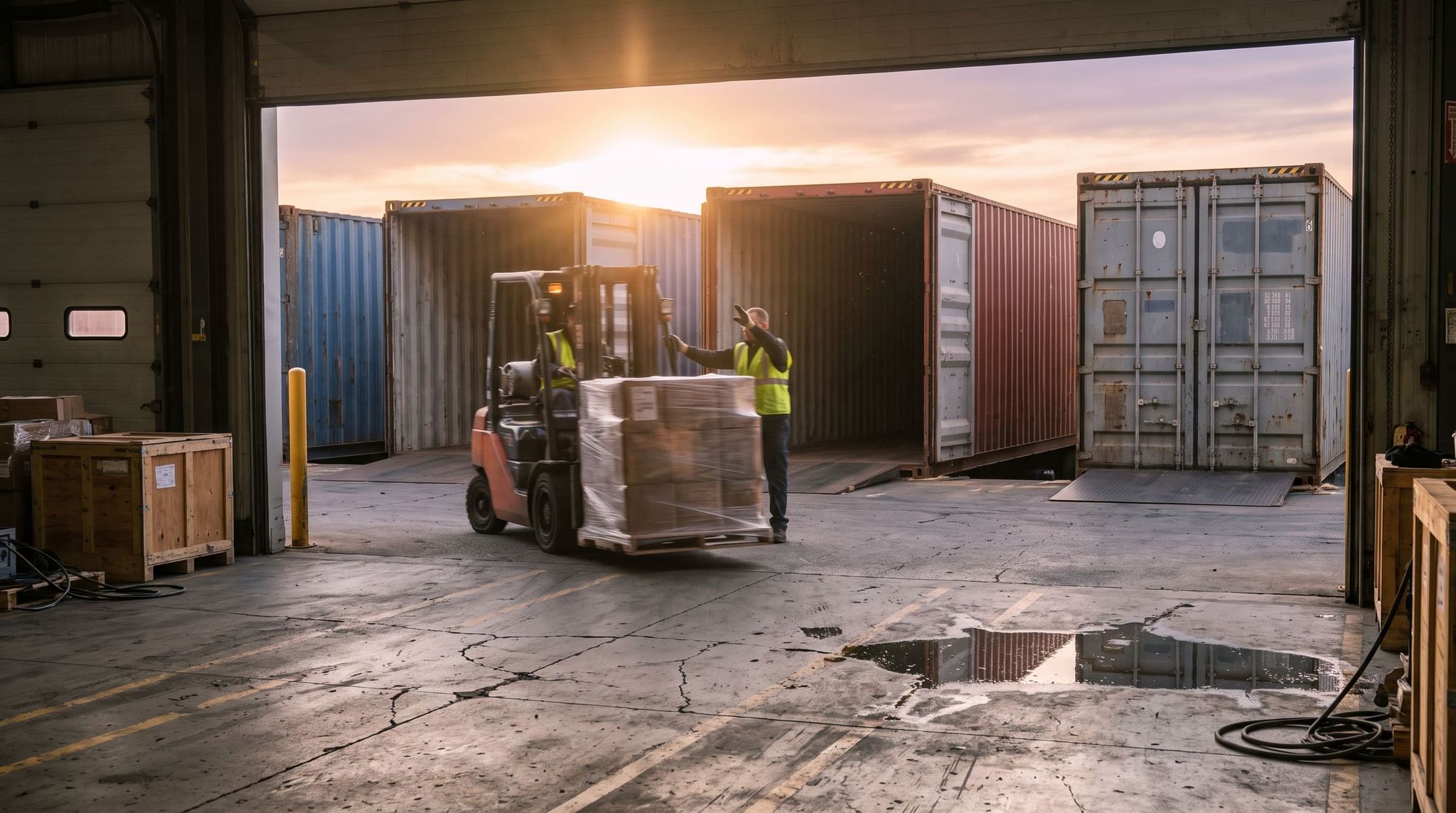
- Delivery to the Amazon fulfillment center by appointment, directly or through a local logistics warehouse (3PL, third-party logistics).
Amazon pays nothing on arrival: its US help page requires "DDP" (Delivered Duty Paid) deliveries and rejects any shipment presented with charges due. In Amazon's sense, that means freight, duties and taxes paid before delivery, with no link to the Incoterm agreed with the factory. You can buy FOB (Free On Board, one of the Incoterms®, a trademark of the International Chamber of Commerce, ICC) and arrange freight and customs yourself: see which Incoterm to choose.
FNSKU or manufacturer barcode?
Two families of codes coexist:
- The manufacturer barcode, or GTIN (Global Trade Item Number): UPC (Universal Product Code, 12 digits, the standard in North America) or EAN (International Article Number, 13 digits, the standard everywhere else, Europe and China included). Assigned by GS1, the global barcode organization, it identifies the product regardless of the seller.
- The FNSKU (Fulfillment Network Stock Keeping Unit): a label generated in Seller Central, starting with X, that ties the unit to your account and your SKU (Stock Keeping Unit).
Until March 31, 2026, Amazon could fulfill an order with identical units from another seller, stored under the same manufacturer code. That "commingled" inventory ended on that date, in the United States, Europe and the UK.
| Your situation | Code to use |
|---|---|
| Brand representative in Brand Registry, new product, a single scannable GTIN | Manufacturer code possible, no label |
| Reseller, even authorized | FNSKU required |
| GTIN exemption, used product or no manufacturer code | FNSKU |
Enrolling your brand in Brand Registry, Amazon's brand registry, is not enough: every ASIN (Amazon Standard Identification Number, the catalog number) must also be linked to the brand.
Buy your GTINs from GS1. Amazon checks UPCs against the GS1 database: a non-compliant code is invalid, listings are removed and your right to create or sell ASINs can be revoked. Go through GS1 (US, UK, France…), never through a code reseller; GS1 US, for example, sells a single GTIN for $30, with no renewal. Every variation (size, color) has its own GTIN and its own FNSKU.
The FNSKU label, by the book
- Black ink on a white, non-reflective, removable label, from 1 × 2 to 2 × 3 in (roughly 2.5 × 5 cm to 5 × 7.6 cm).
- Thermal or laser printing (no inkjet), 300 dpi (dots per inch) minimum, readable for 24 months.
- Applied to a flat surface, never on a corner or a curve, at least 0.25 in (6 mm) from the edge.
- All other visible barcodes are covered, except serial numbers and Transparency codes (Amazon's authentication program).
Preparing units: bags, bubble wrap, batches
Amazon no longer offers a prep or labeling service: in the United States for shipments created from January 1, 2026, and in Europe and the UK from July 1, 2026. Prep is therefore your responsibility in all three markets. In the United States, a non-compliant unit is flagged as defective and is no longer reimbursed if it is damaged or cannot be found.
| Rule | Europe and the UK | United States |
|---|---|---|
| Bag thickness | 1.5 mil (0.038 mm) minimum | 1.5 mil minimum |
| Appearance | Transparent, fully sealed | Transparent (or code on the outside), sealed |
| Bag overhang | 7.5 cm maximum | 3 in (7.6 cm) maximum |
| "Suffocation" warning | Opening larger than 12 cm | Opening of 5 in (12.7 cm) or more |
| Expiration date | DD-MM-YYYY or MM-YYYY | MM-DD-YYYY or MM-YYYY |
A mil is one thousandth of an inch. The bag requirement applies in particular to textiles, plush toys, baby items, multi-piece products, small objects and powders. In the United States, the warning is printed in 10 to 24 points depending on the bag size.
Two different drop tests. In Europe and the UK, a product in a perforated box must survive a 125 cm drop, otherwise it moves to a poly bag. In the US, a fragile product already protected with bubble wrap that does not survive a 3-foot (91 cm) drop must be over-boxed in a carton.
Bubble wrap protects fragile products or products heavy enough to damage others, but not sharp items, which require cut-resistant packaging. In the US, a product over 10 lb (4.5 kg) ships in a double-wall carton.
- Lot sold as a single unit: label it "Sold as a set" or "Do not separate", secure the units together, and show a single code.
- Manufacturer carton (case-pack): same SKU, same condition, same quantity per carton, 150 units maximum, outer codes covered.
- Not allowed: brochures, price tags and non-Amazon labels; in the US, standard hangers.
Shipping cartons: dimensions, weight, labels
| Rule | Europe and the UK | United States |
|---|---|---|
| Maximum dimensions | 63.5 cm per side | 91.4 × 63.5 × 63.5 cm |
| Maximum weight | 23 kg | 22.7 kg (50 lb); 18 kg (40 lb) for jewelry and watches |
| Single oversized item | Up to 30 kg | Allowed, one item per carton |
| Heavy load label | "Heavy package" above 15 kg | "Team lift" above 50 lb, "Mechanical lift" above 100 lb (45 kg) |
The carton is rigid, six-sided, cushioned with bubble wrap, full sheets of kraft paper, air pillows or polyethylene foam. Loose fill chips (even biodegradable), crumpled or shredded paper and polystyrene are rejected, as are cartons that are strapped or banded together.
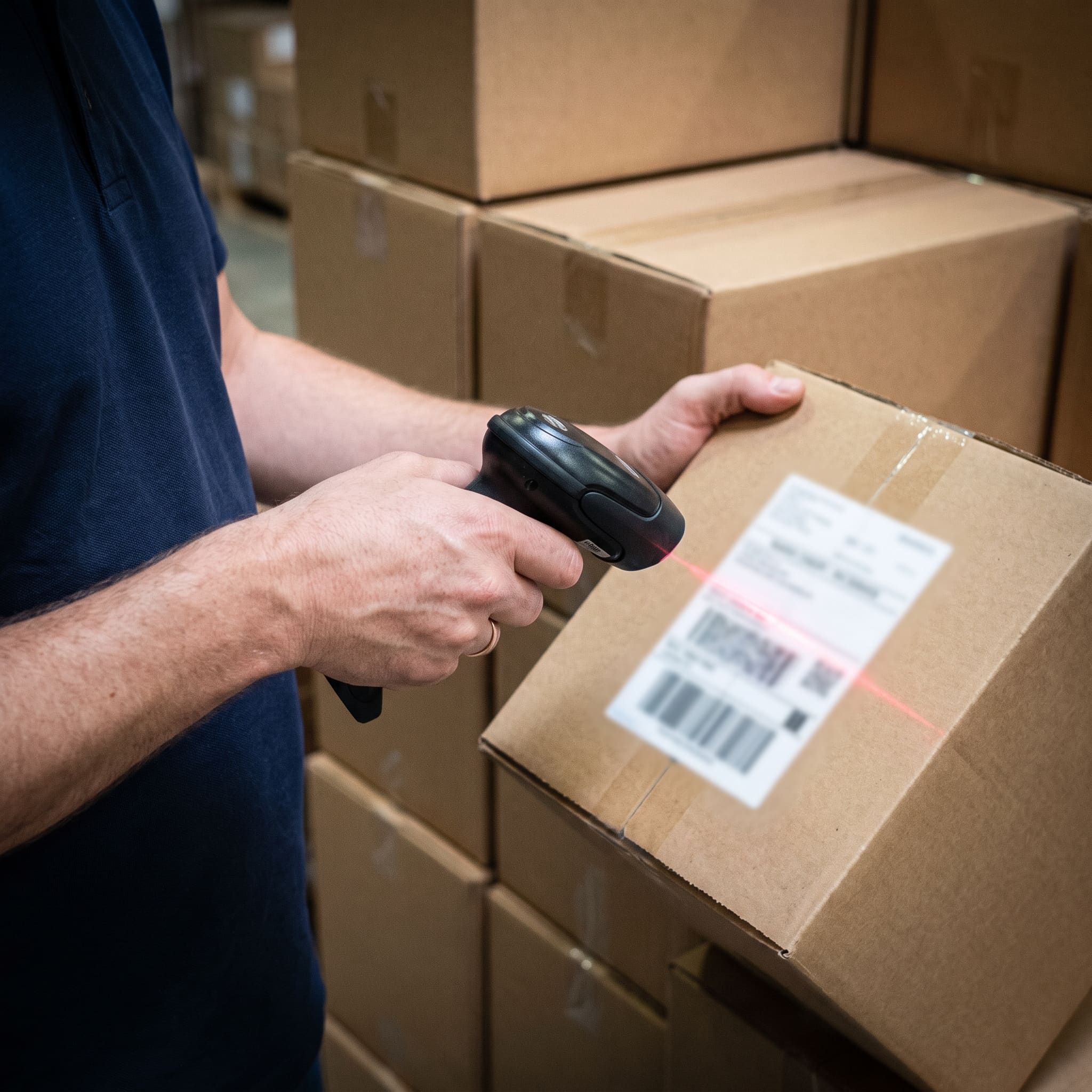
Each carton carries its own Amazon box ID label (FBA box ID): unique, never photocopied, placed flat away from the flap seam; each pallet carries four. Declared weight and dimensions must be accurate.
In Europe, wooden pallets measure 800 × 1,200 mm (1,000 × 1,200 mm accepted in the UK), 1.8 m high and 500 kg maximum, treated to ISPM-15 (the international phytosanitary standard for wood packaging) if they come from abroad.
Declaring box content
Box content (box content) states, carton by carton, the SKU, quantities and expiration dates. Four methods: the Send to Amazon online form, the Seller Central shipment creation tool (up to 15 cartons and 25 SKUs in multi-SKU); an Excel or tab-separated text file (TSV, tab-separated values); 2D barcodes; or Amazon's API (SP-API, Selling Partner API).
A carton contains only units from the same shipment, with a single expiration date per SKU. Without a declaration, Amazon counts by hand and charges manual processing fees: in the US, $0.15 per unit, $0.30 if the first unit arrives in November or December. Europe also plans such fees: check your store's rate card.
Creating the shipment in Send to Amazon
- Choose the inventory: SKU, quantities, manufacturer cartons or units; print the FNSKUs.
- Declare the box content, weights and dimensions.
- Confirm: date, mode (small parcels or pallets), carrier, placement option.
- Print and apply the carton labels, then the pallet labels.
In the US, shipping to the minimum number of locations (often just one) is paid; Amazon's optimized option, to several locations, avoids these placement fees if each product has at least five identical cartons or pallets.
Choose the right time. In the US, an international shipment must arrive within 75 days of its creation; if the plan is split across several centers, all shipments must arrive within 30 days of the first delivery. Late or to the wrong center, inbound defect fees apply: for example $0.38 per unit for a "large standard" product of 12 oz (340 g) or less, on shipments created from January 15, 2026.
So create the shipment when the goods are ready and freight is booked, after checking any capacity limits on your account in Seller Central.
Delivery to the center: carrier and appointment
Small parcels go with a carrier, in the US possibly an Amazon partner at a negotiated rate. Pallets, and small parcels entrusted to a carrier not on Amazon's list, require an appointment booked in Carrier Central, Amazon's carrier portal; without a valid appointment, delivery may be refused.
In the US, appointments must be booked at least 24 hours in advance, and a truck that is 30 minutes late or more is turned away. A floor-loaded container with unpalletized cartons gets very few slots.
In Europe, the truck must be able to back up to a dock and show a gross vehicle weight rating (GVWR) of at least 7.5 metric tons. Finally, Amazon does not return US inventory from outside the United States: plan for a local address for removals.
Where to prep: at the factory, in China, or at a prep center?
Prep is now your responsibility in all three markets: the only question is where to do it. A prep center is a provider that specializes in FBA prep and is based in the country of sale.
| Option | Advantages | Limitations |
|---|---|---|
| At the factory | Applied during production | Specification and inspection are essential |
| Consolidation warehouse in China | Multiple suppliers, repacking, inspection | One extra step |
| Prep center or 3PL at destination | Flexibility, inventory shared with your other channels | Double handling, local cost |
The first two options can be combined: the factory bags and labels, the warehouse checks, repacks if needed and loads a single container. That is what we organize during consolidation in China (see multi-supplier consolidation), alongside our brand and e-commerce support. In every case, have labels, poly bags and cartons checked during the pre-shipment inspection.
Rejections and fees: the most common mistakes
The consequences range from a reported defect to rejection, destruction, or return of your inventory at your expense, all the way to a block on future shipments. Since March 31, 2026, units from a reseller that arrive without an FNSKU are no longer eligible for reimbursement. Factor these risks, along with freight and duties, into your landed cost.
Frequently asked questions
Can I use my Chinese supplier's EAN code?
For a private label, it is best to avoid it. Amazon checks codes in the GS1 database and recommends obtaining them directly from GS1. A code registered in the factory's name makes you dependent on that factory, and there is no guarantee Amazon will link it to your brand: buy your own GTINs, or label with FNSKU.
Can my factory apply the FNSKU labels?
Yes, that is the simplest approach. Send the PDFs by SKU, specify placement and printing method, then have a sample scanned before the cartons are sealed.
Do all products need to be bagged?
No: mainly products that are sensitive to dust or leaks, multi-piece, small, powdered or scented. A warning label is mandatory above 12 cm of opening in Europe and the UK, and from 5 inches (12.7 cm) in the US.
Can a full container be delivered directly to Amazon?
It is possible, but demanding: appointment, customs cleared, compliant and labeled cartons. In the US, slots are scarce for a floor-loaded container: palletize if you can. The alternative: deliver to a 3PL that replenishes Amazon as sales come in.
What changed at Amazon in 2026?
Four dates to remember:
- January 1: end of prep and labeling by Amazon in the US.
- January 15: new rate card for placement fees and defective inbound shipping fees (US).
- March 31: end of commingled inventory between sellers, FNSKU mandatory for resellers (US, Europe, UK).
- July 1: end of prep and labeling by Amazon in Europe and the UK.
Sources
- FBA barcode requirements — Amazon Seller Central (US) (new tab)
- FBA barcode requirements — Amazon Seller Central (France) (new tab)
- FBA barcode requirements — Amazon Seller Central (UK) (new tab)
- FBA barcode and labeling FAQ — Amazon Seller Central (new tab)
- Using Amazon barcodes for FBA — Amazon Seller Central (new tab)
- Valid universal product codes (UPC) — Amazon Seller Central (new tab)
- Product packaging requirements — Amazon Seller Central (US) (new tab)
- Product packaging requirements — Amazon Seller Central (France) (new tab)
- Product packaging requirements — Amazon Seller Central (UK) (new tab)
- Poly bagging requirements — Amazon Seller Central (US) (new tab)
- Fulfillment by Amazon prep service (ends January 1, 2026) — Amazon Seller Central (US) (new tab)
- Fulfillment by Amazon prep service (ends July 1, 2026) — Amazon Seller Central (France) (new tab)
- Fulfillment by Amazon prep service (ends July 1, 2026) — Amazon Seller Central (UK) (new tab)
- US FBA prep and labeling services to end January 1, 2026 — Amazon Selling Partner API (new tab)
- Shipping and routing requirements — Amazon Seller Central (US) (new tab)
- Shipping and routing requirements — Amazon Seller Central (France) (new tab)
- Shipping and routing requirements — Amazon Seller Central (UK) (new tab)
- Shipment labeling requirements — Amazon Seller Central (new tab)
- Provide box content information — Amazon Seller Central (new tab)
- Fulfillment by Amazon manual processing fees — Amazon Seller Central (new tab)
- Inbound placement service fees — Amazon Seller Central (new tab)
- Additional fees for defective inbound shipments — Amazon Seller Central (new tab)
- Carrier requirements for delivering shipments — Amazon Seller Central (US) (new tab)
- Do I need to schedule an appointment with the fulfillment center? — Amazon Seller Central (France) (new tab)
- Delivering imports to Amazon — Amazon Seller Central (US) (new tab)
- How to send your inventory to Amazon fulfillment centers — Amazon Supply Chain (April 7, 2023) (new tab)
- Get GS1 UPC Barcodes to Sell on Amazon — GS1 US (new tab)