
- Home
- Guides & resources
- Incoterms & international trade
- How to Negotiate with Chinese Suppliers: Price, MOQ and Payment Terms
Incoterms & international trade
How to Negotiate with Chinese Suppliers: Price, MOQ and Payment Terms
Target price, itemized quotes, MOQ, 30/70 deposits, letters of credit and contract penalties: a practical method to negotiate with Chinese suppliers without sacrificing quality.
Contents10 items
- Preparing the negotiation: target price, itemized quote, material costs
- Negotiating price without sacrificing quality
- MOQ: where it comes from and how to negotiate it
- Payment terms: 30/70 deposit, T/T, letter of credit, escrow
- Late-delivery and quality penalties: put them in the contract
- Negotiation culture: what works with Chinese suppliers
- Costly negotiation mistakes
- Negotiate on your own or get support?
- Frequently asked questions
- Sources
Knowing how to negotiate with Chinese suppliers isn't about squeezing 5% off the unit price. It's about landing a deal that holds together: a price the factory can live with, a minimum order that matches your sales, payment terms that keep your leverage until final inspection, and a contract that spells out what happens if the goods are late or defective. A discount won at the expense of any of these almost always costs you later.
Preparing the negotiation: target price, itemized quote, material costs
Start from your selling price
Work your target price backward: net selling price, minus your margin, minus every cost between the factory and your warehouse (freight, insurance, duties, inspection, final delivery). What's left is the ex-works or FOB price you can actually afford. Without that number, you only know whether a quote is lower than another, not whether it's good. Full method: how to calculate landed cost.
Ask for an itemized quote
Send every supplier the same request for quotation (RFQ) template and ask for:
- unit price at several quantity breaks (for example 1,000, 3,000 and 5,000 units);
- a cost breakdown: materials, labor, packaging, tooling;
- tooling cost, who owns the mold and its expected life;
- sample price and lead times (samples, production);
- the Incoterms® rule and an exact named place (for example "FCA factory" or "FOB port of loading", Incoterms® 2020);
- currency and how long the offer is valid;
- proposed payment terms.
A supplier who refuses any breakdown isn't necessarily dishonest, but you're negotiating blind. Quantity breaks reveal the share of fixed costs: a big gap between 1,000 and 3,000 units signals expensive setup, which means the MOQ can be traded against price.
Estimate the cost of materials
For products where materials dominate (metal, plastic, textiles), build your own estimate: the weight of each component, scrap included, times the market price of the material. Prices for steel, aluminum, copper, cotton and plastic resins are published. You'll know whether a requested price increase is justified, and you can propose an index clause that works both ways.
Factor in Chinese export tax rules, too: many exported products qualify for a VAT export rebate whose rate depends on the product and changes by government decision. A recent example: since April 1, 2026, photovoltaic products no longer qualify, and the rate for batteries dropped from 9% to 6% before being scrapped on January 1, 2027. Changes like these flow straight into the prices you're quoted.
Put suppliers in fair competition
Two or three qualified suppliers quoting on the same spec give you a market price and a fallback. Say so, but don't bluff: a supplier who finds out a "competing offer" never existed loses trust. To build that shortlist, follow our 7-step method for finding a supplier in China.
Negotiating price without sacrificing quality
A discount forced through is often clawed back elsewhere: thinner sheet metal, lighter cartons, a cheaper component, undisclosed subcontracting. Buyers know this gradual slide in quality from one order to the next as quality fade. The defense comes in three parts: a written spec, a signed reference sample and an inspection on every lot.
Levers that lower the price without touching the product:
- Annual volume: a 12-month forecast delivered in several shipments beats a single large order.
- Payment terms: a slightly larger deposit or a faster balance is worth something to a factory that has to finance its materials.
- Packaging: a simpler box, more units per carton, better palletization.
- Timing: production outside peak season, or a flexible delivery date, frees up capacity.
- Options: a standard color rather than a custom one, a catalog component rather than a bespoke part.
Finally, pin down the currency (US dollars, yuan or euros), how long the price holds, and what happens if material costs move: a fixed price for the order, indexing beyond a threshold, or review on a set date. If you sell in the United States, negotiate on landed cost: since July 24, 2026, an additional 12.5% Section 301 duty applies to most products of China, on top of existing duties, which outweighs a few cents of discount. And if you buy through a trading company, ask your licensed customs broker whether the "first sale" rule could apply: under strict conditions (a bona fide, arm's-length sale for export to the US), duty can be based on the price the middleman paid the factory.
MOQ: where it comes from and how to negotiate it
The minimum order quantity (MOQ) isn't always arbitrary. Ask where it comes from; it makes the compromise easier to find.
| Source of the MOQ | Example | What you can negotiate |
|---|---|---|
| Minimum raw material purchase | A roll of fabric, a lot of resin pellets, a steel coil | Standard material in stock, one MOQ across all colors |
| Machine setup | Mold change, printing press setup | Higher price for a short run, setup fee billed separately |
| Dyeing or finishing | Dye lot, glaze firing | Standard color, grouping SKUs |
| Printed packaging | Offset-printed boxes | Plain box plus label, or boxes printed for two orders |
| Sales policy | Threshold set by the factory | Annual volume commitment, trial order |
Three proposals often work for a first order:
- A trial order below the MOQ at a higher unit price, in exchange for a written commitment on follow-up orders if the lot passes inspection.
- A combined MOQ rather than per SKU: 1,000 units across all colors instead of 1,000 per color.
- An annual volume delivered in several shipments, at the price for the full volume.
Conversely, be wary of a supplier with no minimum at all for a custom product: it may be producing from stock, through a subcontractor, or with materials it can't trace.
Payment terms: 30/70 deposit, T/T, letter of credit, escrow
Exporters want to be paid early; importers want the goods early and to pay late. Negotiating payment terms is about sharing that risk.
| Method | How it works | Risk to the buyer | When to use it |
|---|---|---|---|
| 100% upfront | Full wire transfer with the order | Highest | Samples, very small amounts |
| 30% deposit, 70% before shipment | Wire transfer in two steps | High if the balance goes out unchecked | Common practice, tie it to inspection |
| Deposit, balance after passed inspection | Balance paid against the report | Moderate | First orders |
| Balance against copy of the bill of lading | Balance paid once goods are on board | Moderate: proves shipment, not quality | Together with a pre-shipment inspection |
| Letter of credit (L/C) | The bank pays against specified documents | Low if an inspection certificate is required | Large amounts, new relationships |
| Documentary collection | Banks release documents against payment | Moderate: you pay against documents without seeing the goods | Established relationships |
| Open account | Payment 30 to 90 days after shipment or delivery | Lowest | Strong track record, regular volumes |
| Platform escrow | Funds held until delivery | Limited to the platform's terms | Small online orders |
T/T payments and the 30/70 split
A T/T (telegraphic transfer) is simply an international wire transfer sent over the SWIFT banking network. The 30/70 split (30% with the order to fund materials, 70% before shipment) is a starting point, not a rule. What matters is the event that triggers the balance: require that it be paid after a passed inspection report, and put that in the contract. With an established supplier, you can then move to balance against a copy of the bill of lading, and later to 30-day terms.
On every payment, check that the beneficiary account is in the exact name of the company that signed the contract, the one on the business license. A personal account, or one in the name of a "sister company," should stop you in your tracks. And confirm by phone any change of bank details announced by email: this scam, known as business email compromise (BEC), accounted for $3.05 billion in losses reported to the FBI in 2025.
Letters of credit: protecting large orders
With a documentary credit, or letter of credit (L/C), your bank commits to pay the supplier once it presents the specified documents: invoice, packing list, bill of lading and any certificates you require. Most letters of credit are issued subject to the ICC's UCP 600 rules, in force since July 1, 2007.
The key point: banks examine documents, not goods. So include among the required documents an inspection certificate issued by an inspection company you nominate, showing a passed result. Bank fees and strict formalities (a single discrepancy can hold up payment) make L/Cs best suited to large amounts.
Escrow and platform protection
B2B marketplaces offer escrow: you pay the platform, which releases the funds under its own terms. On Alibaba.com, Trade Assurance covers issues such as late shipment and quality defects measured against the agreed terms, but only for orders paid through the platform and within the claim windows it sets. Quality disputes are only won with measurable requirements. Useful for small purchases, this protection replaces neither supplier vetting nor inspection.
Late-delivery and quality penalties: put them in the contract
Without a clause, a delay or defect is up for debate; with one, it has a price. Chinese law recognizes contractual penalties (违约金, wéiyuējīn, usually translated as liquidated damages): Article 585 of the PRC Civil Code lets the parties agree on an amount or a calculation method. But a court or arbitral tribunal can, at the factory's request, reduce damages that are excessively higher than the actual loss.
Under the Supreme People's Court's 2023 interpretation on the general part of contracts, damages exceeding the loss by more than 30% may generally be considered excessive. It's a benchmark, not an automatic cap: judges weigh the circumstances. A realistic penalty, backed by your actual loss, is easier to enforce than a punitive one.
What a solid clause covers:
- Delay: an amount per day or per week from a precise production completion date, a cap, and your right to cancel and be refunded beyond a set delay.
- Quality: the reference (spec, golden sample, AQL level per defect class), your right to reject the lot, rework or replacement at the factory's cost, and re-inspection at its expense.
- Molds and tooling: your ownership, a list of the tools and your right to take them back.
- Confidentiality: a China-law NNN agreement (non-disclosure, non-use, non-circumvention).
- Language and disputes: a bilingual contract stating which version prevails, signed and stamped with the company chop; arbitration, for example in Hong Kong, whose awards are enforceable in mainland China.
These are legal matters: have the contract drafted by a lawyer who knows Chinese law. This guide gives benchmarks, not legal advice.
Negotiation culture: what works with Chinese suppliers
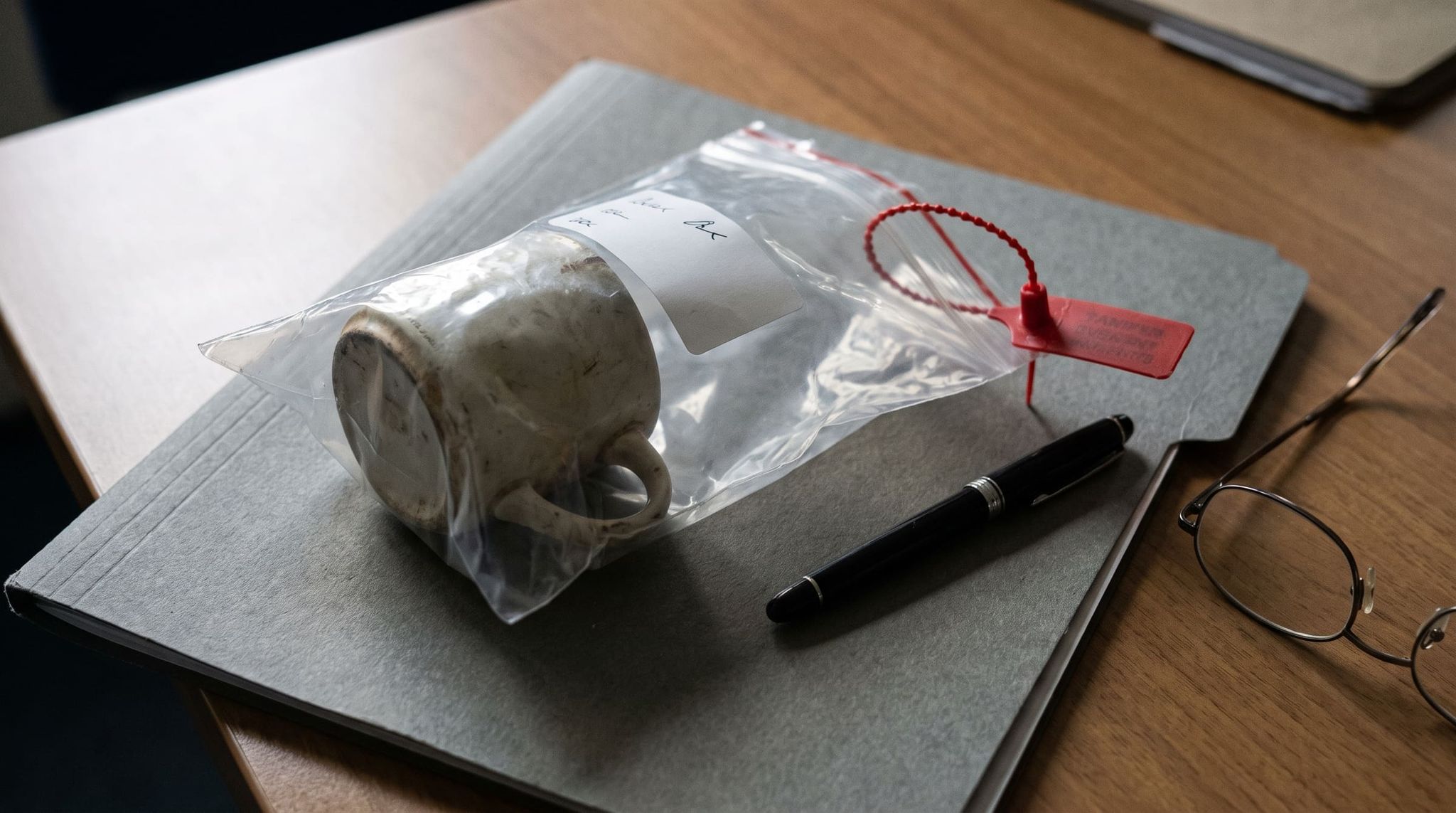
- The relationship matters: a factory invests more (production priority, responsiveness, early warnings) in a regular customer it knows. Trust is built order after order.
- Save face: criticizing a mistake in public, in front of the team, puts your counterpart on the defensive. Handle disagreements one-on-one, with evidence.
- Find the decision-maker: the salesperson relays, the boss (laoban) decides. Major concessions are negotiated with the boss, often during a visit.
- "Yes" isn't agreement: it sometimes means "I understood." Rephrase, and confirm every point in writing: meeting notes, a WeChat message, a contract amendment.
- Trade concessions: "if you accept the balance after inspection, we'll accept a 40% deposit." Never give something for nothing.
- Mind the calendar: capacity tightens before Chinese New Year, which falls on February 6, 2027. Negotiate and place spring orders in the fall.
Costly negotiation mistakes
Negotiate on your own or get support?
Negotiating on your own works if you speak the factory's language, know your product's costs and can travel to the factory. Otherwise three handicaps add up: you negotiate in English, through a salesperson who translates and filters; you don't know the real cost; and no one at the factory checks that the price you got matches the product you receive.
With NOVASEA, negotiation is part of a complete method:
- a bilingual product spec, written with you down to the detail;
- itemized quotes compared like for like, and landed cost calculated before you commit;
- negotiation in Chinese, directly with the factory's decision-makers;
- a supplier contract and China-law NNN agreement drafted with our partner law firm and signed by you;
- inspections with photo reports, and a balance released only once a lot has passed;
- every step logged in NOVASEA Bridge, our client portal.
Learn more about our sourcing and purchasing service, end-to-end sourcing and our pricing. To weigh your options, also read importing from China on your own or with a partner.
Frequently asked questions
How much deposit should I pay a Chinese supplier?
30% is common, to fund materials; some factories ask for more on custom products. The percentage matters less than the event that triggers the balance: a passed inspection report, written into the contract.
Can I negotiate the MOQ on a first order?
Yes, once you know where it comes from: materials, setup, dyeing, packaging. A trial order at a higher price, a combined MOQ across colors and an annual volume commitment are the most common compromises.
Is a letter of credit worth it for a small order?
Rarely: bank fees and paperwork weigh heavily on a small amount. A deposit with the balance after inspection gives good protection at a lower cost.
Should I pay in US dollars or Chinese yuan?
Many export quotes are in US dollars; some suppliers accept yuan (CNY) or euros. Paying in yuan can avoid the factory's currency margin but exposes you to the exchange rate, on top of your own risk if you buy in pounds. Either way, put the currency, price validity and a rule for sharp rate moves in the contract.
Are late-delivery penalties enforceable in China?
Yes, if they're written into the contract and proportionate to the loss: the PRC Civil Code allows them, but a court or arbitrator can reduce an excessive amount. Set a realistic amount, a cap and a right to cancel.
Sources
- Methods of Payment — International Trade Administration (new tab)
- ICC's new rules on documentary credits now available (UCP 600) — International Chamber of Commerce (new tab)
- Trade Assurance on Alibaba.com: a complete guide (2026) — Alibaba.com (new tab)
- Stay on platform, stay protected — Alibaba.com Reads (new tab)
- China Contract Damages: How Liquidated Damages Give Your Contract Real Teeth — Harris Sliwoski (new tab)
- China to eliminate export tax rebates for solar and batteries by 2027 — Caixin Global (new tab)
- 2025 Internet Crime Report — FBI Internet Crime Complaint Center (new tab)
- US Section 301 tariffs on products of 60 economies, Circular No. 655/2026 — Hong Kong Trade and Industry Department (new tab)
- Using the First Sale Rule to Reduce Tariffs — Miller & Chevalier (new tab)
- Why Hong Kong: enforcement of awards — HKIAC (new tab)
- General holidays for 2027 — GovHK (new tab)