
- Home
- Guides & resources
- Sourcing & suppliers
- Importing from China on Your Own or With a Partner: The Real Cost of Mistakes
Importing from China on Your Own or With a Partner: The Real Cost of Mistakes
The 10 mistakes that cost first-time importers the most, the hours importing from China really takes, and an honest comparison of going it alone, hiring a sourcing agent or using full-service support.
Contents8 items
- Importing from China on your own: what the quote doesn't show
- 10 costly mistakes when importing from China
- The real cost of your time
- DIY vs sourcing agent vs full-service partner
- When does it make sense to import from China without an agent?
- What full-service support from NOVASEA changes
- Frequently asked questions
- Sources
Importing from China on your own is entirely possible: an account on a B2B marketplace, a few quotes, a wire transfer, a freight forwarder, and a few months later a container shows up at your dock. So the real question isn't "can I do it?" but "what will it actually cost me?" First-time importing mistakes rarely show up when you place the order. They show up when the container is opened, when a regulator stops the shipment, or three months later when your product appears in a competitor's listing.
Here are the ten most expensive mistakes, the time the job really takes, and an honest comparison: on your own, with a sourcing agent or with a full-service partner.
Importing from China on your own: what the quote doesn't show
A factory quote prices one thing: the product, ex works or loaded at the port. It says nothing about what will drive your real margin: freight, duties and taxes, currency, inspections and, above all, the cost of everything that can go wrong between the purchase order and the first sale.
Regulators give a sense of scale. In 2025, the EU's Safety Gate rapid alert system logged 4,671 alerts on dangerous non-food products, a record since it was launched in 2003. According to figures presented by the European Commission, 2,006 of them involved products of Chinese origin, roughly 43%. Cosmetics, toys and electrical appliances topped the list. Behind every alert, a business had to withdraw, block or recall its goods.
Chinese manufacturing isn't the problem: the same factories produce for very demanding brands. But quality has to be specified, negotiated and verified, and when you buy on your own you play all three roles from thousands of miles away.
10 costly mistakes when importing from China
1. A vague product specification
A photo and three lines of description are not a purchase order. The factory fills the gaps with the cheapest option: thinner steel, lighter cartons, a "close enough" color. Worse, without a written requirement no defect can be disputed: you can only reject what deviates from a signed document.
Dimensions and tolerances, exact materials, finishes, markings, packaging and tests all belong in a versioned spec sheet, with the critical points translated into Chinese, backed by a signed reference sample (the golden sample).
2. A trading company mistaken for a factory
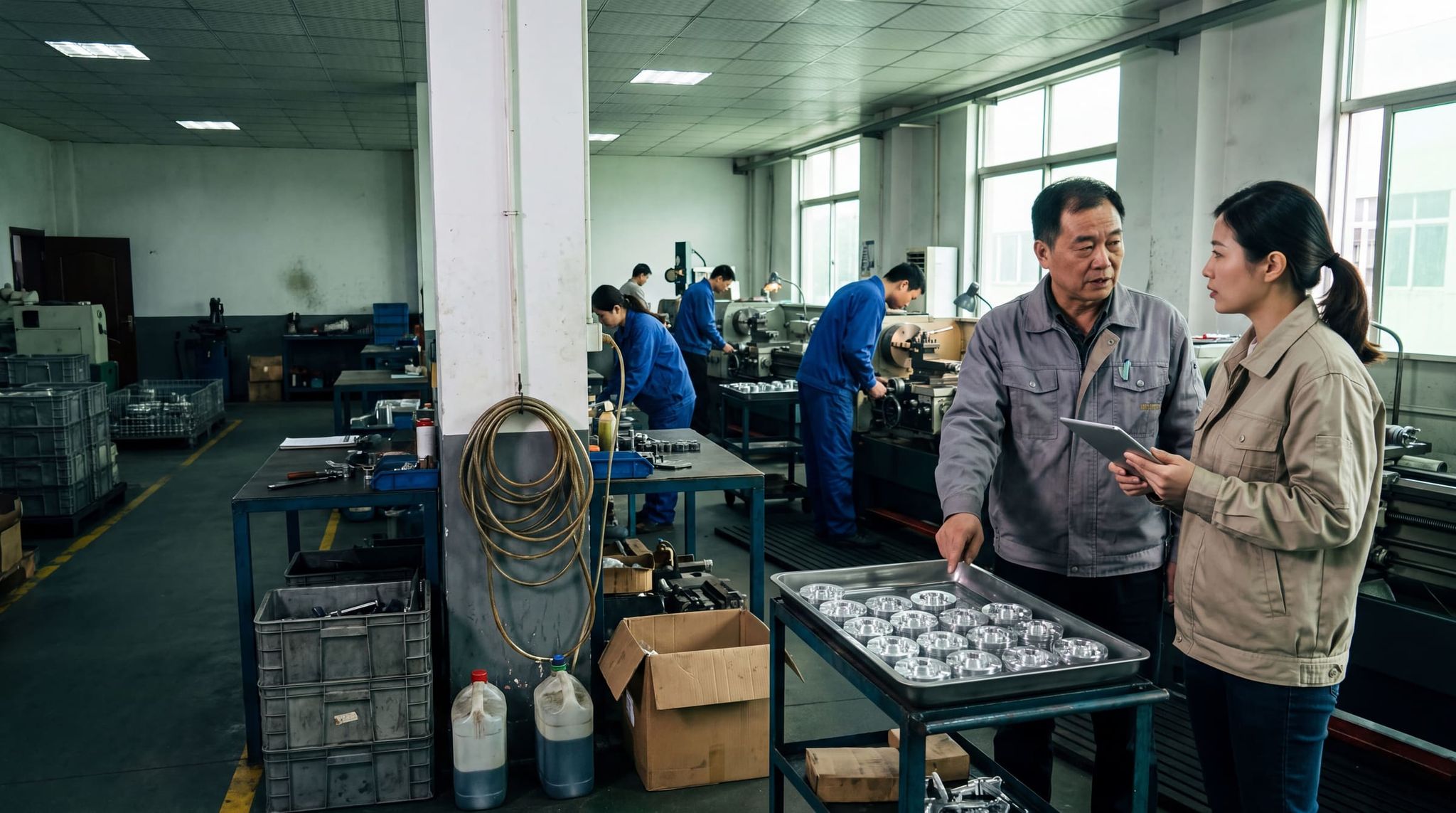
On B2B marketplaces, many "manufacturers" are actually trading companies. That's not a problem in itself, but you lose control of quality and subcontracting. The business scope on the supplier's Chinese business license, a site visit or a factory audit will settle the question.
3. Comparing quotes on unit price alone
Tooling billed separately, packaging as an option, different delivery terms, a longer lead time: the cheapest-looking quote often becomes the most expensive once every quote covers the same scope. Compare line by line, then on landed cost at your warehouse: see the method and a worked example.
4. The wrong Incoterms® rule
The Incoterms® rules published by the International Chamber of Commerce (ICC), still in their 2020 edition, set who pays for what and when risk passes from seller to buyer. An EXW (Ex Works) price with no one lined up for Chinese export clearance, a CIF price with bare-minimum insurance, or an "all-in" DDP deal that takes your own customs entry out of your hands are all avoidable surprises.
For a container handed over at the terminal, the ICC recommends FCA rather than FOB. Always state the edition and a named place. See FOB, CIF, DDP or EXW: which rule to choose.
5. Paying 100% upfront, or releasing the balance unchecked
According to the U.S. International Trade Administration, cash in advance is the least attractive option for the buyer: you lose all leverage if the goods are late or defective. The usual structure is a deposit, often 30%, with the balance paid before shipment. What matters is tying that balance to a passed inspection report, in writing. Payment methods are covered in detail in our guide on how to negotiate with Chinese suppliers.
6. No pre-shipment inspection
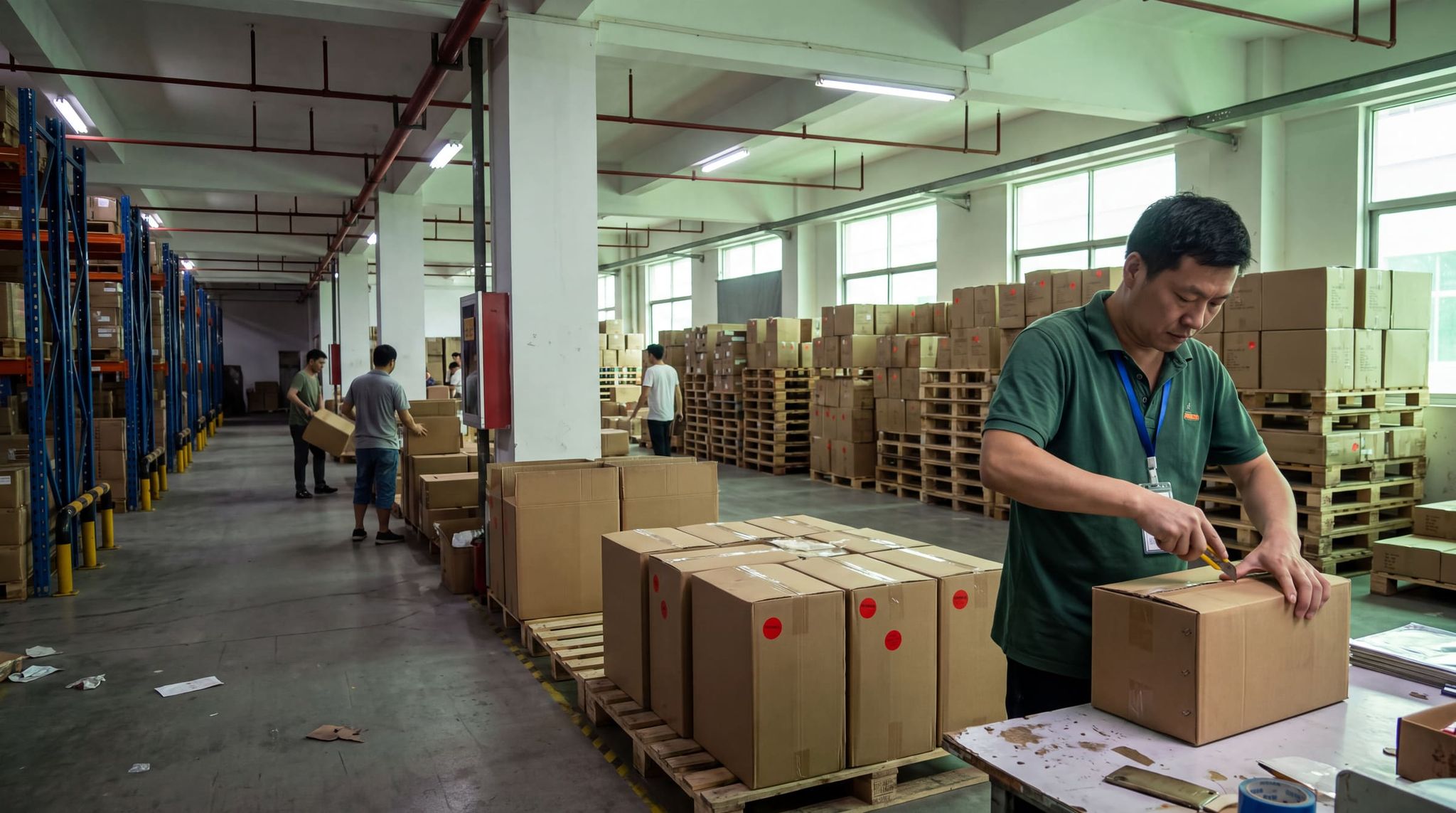
Once the container has sailed, your remedies become slow, expensive and uncertain. A pre-shipment inspection on a sample drawn under ISO 2859-1 (closely aligned with the ANSI/ASQ Z1.4 sampling tables familiar to US buyers) costs a few hundred dollars per inspector-day (see our pricing). A defective lot discovered on arrival costs you the goods, the freight, the duties already paid and the lost sales. For a first order, add a during-production check, while defects can still be fixed.
7. Overlooked product regulations
The factory makes what you ask for; the importer answers for the product in its market. In the United States, the Consumer Product Safety Commission (CPSC) has required since July 8, 2026 that certificate data for covered consumer products (General Certificates of Conformity and Children's Product Certificates) be e-filed at the time of entry, and children's products subject to a safety rule must be tested by a CPSC-accepted third-party lab. Electronics may also fall under FCC rules.
In Great Britain, the UKCA mark sits alongside CE. In the European Union, the General Product Safety Regulation (GPSR), in application since December 13, 2024, requires an economic operator established in the EU to answer for each covered consumer product. A lab test costs far less than a recall: see CE, UKCA, GPSR and North American rules.
8. Underestimated freight, duty and fees
Freight, surcharges, insurance, terminal handling, customs brokerage, duties, final delivery, currency and storage: in the worked example in our landed cost guide, each delivered unit costs 31% more than the factory price. Duty rates move, too. Since July 24, 2026, an additional 12.5% Section 301 duty applies to most products of China entering the United States, on top of existing duties; US ocean shipments also need an Importer Security Filing (ISF) before loading in China.
Several suppliers each shipping less-than-container loads also multiply fixed costs: consolidation in China, close to your factories, often lets you ship a single container.
9. Leaving your intellectual property exposed
China follows a first-to-file system: a trademark registered only in the US, the UK or the EU is not protected there, and someone else can file it before you. Don't send drawings or files before signing a China-law NNN agreement (non-disclosure, non-use, non-circumvention) and filing your trademark in China. See how to protect your IP in China.
10. Ignoring the Chinese calendar
Chinese New Year falls on February 6, 2027. Many factories close or slow down for several weeks around that date, and the restart is slow as workers return. An order meant for spring shelves therefore has to start in the fall: see a typical import timeline.
| Mistake | Typical consequence | Prevention |
|---|---|---|
| Vague spec | Wrong product, defects you can't dispute | Written, versioned spec and signed golden sample |
| Trader mistaken for a factory | No control of quality or subcontracting | Verified business license, factory audit |
| Unit price only | Wrong supplier selected | Like-for-like quotes, landed cost |
| Wrong Incoterms® rule | Unexpected costs and risks | Rule, edition and named place spelled out |
| 100% upfront | No leverage if something goes wrong | Deposit, balance after inspection |
| No inspection | Defective lot paid for and delivered | Pre-shipment inspection under ISO 2859-1 |
| Regulations overlooked | Detained goods, withdrawal, recall | Market requirements in the spec, lab tests |
| Costs underestimated | Margin wiped out | Landed cost calculated before ordering |
| IP exposed | Copies, trademark filed by a third party | NNN agreement, China filing before sharing files |
| Calendar ignored | Missed selling season | Backward schedule built around Chinese holidays |
The real cost of your time
Time is the most underestimated cost of importing on your own, because it never shows up on an invoice. Here is a rough order of magnitude for a first, simple product, travel to China excluded; a technical or regulated product takes more.
| Stage | What it involves | Indicative time |
|---|---|---|
| Product spec | Specifications, drawings, market requirements, translation | 10–20 h |
| Search and vetting | Long list, licenses, video calls, references | 15–30 h |
| Quotes | RFQ, follow-ups, line-by-line comparison | 10–20 h |
| Samples | Back-and-forth, testing, corrections, golden sample | 10–20 h, over several weeks |
| Negotiation and contract | Price, MOQ, payment terms, contract, NNN | 8–15 h, plus your lawyer |
| Production follow-up | Check-ins, photos, chasing | 10–25 h |
| Quality control | Booking the inspection, reading the report, handling defects | 5–10 h |
| Freight and customs | Forwarder, broker, documents, insurance, receiving | 8–15 h |
| Total | roughly 80–150 h |
And every "first time" (first contract, first technical file, first customs entry) takes more hours, and produces more mistakes, than it does for a team that does it every week.
DIY vs sourcing agent vs full-service partner
| Criterion | On your own | Sourcing agent | NOVASEA full service |
|---|---|---|---|
| Finding factories | Marketplaces and trade shows, vetting is on you | List provided, vetting varies | Factories visited and audited before you see them |
| Product spec | Written by you | Often copied from your email | Written with you, bilingual, down to the detail |
| Negotiation | In English, remotely | In Chinese, interests sometimes tied to the factory | In Chinese, itemized quotes, landed cost calculated |
| Contract and NNN | You hire a lawyer | Rarely included | Drafted with our partner law firm, signed by you |
| Quality control | Booked and paid separately | Depends on the agent | Inspections with photo reports, balance after lot passes |
| Payments | One wire per factory | Your job | Milestones checked, a single invoice |
| Logistics | Several shipments, several invoices | Sometimes offered | Consolidation in China, a single container out of China |
| Customs | Your forwarder or broker | Your job | Coordinated with our licensed partners |
| Visibility | Email and messaging apps | Everything in NOVASEA Bridge | |
| Your role | Do everything | Supervise the agent | Decide, approve, receive |
| Cost | Your time and your mistakes | Commission, sometimes paid by the factory | Fees agreed upfront |
A sourcing agent knows the language and the ground. Before signing, ask how the agent is paid: an agent earning commission from factories doesn't share your interests. Check what's included, too: many stop at negotiation.
Full-service support means handing over execution, from factory search to delivery, to a team accountable for an outcome: the product in your spec, delivered to your warehouse. You keep the decisions; the team does the work.
When does it make sense to import from China without an agent?
Honestly, in several cases:
- a catalog product with no customization or tooling;
- a lightly regulated or unregulated product (not a toy, not electrical, no food contact, not a cosmetic);
- a small order you could afford to lose;
- a supplier you've already qualified and have a track record with;
- someone on your team who speaks Chinese, knows international trade and has the time.
Even then, keep two safeguards: a pre-shipment inspection, and a balance released only on its results. Both can be booked on their own: quality control and factory audits.
On the other hand, for a customized, regulated or technical product, several suppliers, or an amount you can't afford to lose, full-service support adds the most value.
What full-service support from NOVASEA changes
With end-to-end sourcing, you hand over a spec and receive the product at your dock. You pay for a service; there's nothing left for you to manage. In between, every stage follows a precise method:
- Product spec written with you, bilingual, down to the detail: materials, dimensions, tolerances, colors, markings, packaging.
- Factories searched, visited and audited before you see them; quotes compared like for like and landed cost calculated (sourcing, factory audits).
- Negotiation in Chinese, then a supplier contract and China-law NNN agreement drafted with our partner law firm and signed by you. For your China trademark filing, we coordinate with our licensed partners.
- Samples managed through to a sealed golden sample; lab testing coordinated for your market (product development).
- Production follow-up and inspections with photo reports; the balance is only paid once a lot has passed (quality control).
- Consolidation in China, close to your factories, a single container out of China, customs formalities coordinated with our licensed partners, and delivery to your warehouse (logistics).
One project manager is your single point of contact, and everything is visible in NOVASEA Bridge, our client portal: inspection reports, documents, shipments, messages and costs. Fees are agreed upfront (pricing). Want to meet your suppliers? We also organize factory visits in China.
Frequently asked questions
Can you import from China without an agent?
Yes. No rule requires a middleman. In the US you need an importer number, in practice a licensed customs broker, and a customs bond for formal entries; in the UK and the EU, an EORI number. The hard part isn't the paperwork: it's qualifying the factory, controlling quality and meeting your market's product rules.
How much does a sourcing agent in China cost?
Models vary: a commission on purchase value, a fixed fee per project, or a monthly retainer. Transparency matters more than the rate: who pays the agent, and what does the price include (audits, inspections, logistics)? Our own fees are published on our pricing page.
Do I need to travel to China to import?
Not necessarily, but someone has to go to the factory: to confirm it really manufactures, to follow production and to inspect before shipment. If you want to meet your suppliers, a well-prepared visit makes the trip worthwhile.
Is Alibaba safe enough for importing from China?
It's a good directory, not a vetting process. Badges are partly self-declared or paid for, and the platform's payment protection only covers orders paid on the platform, under its own terms. Check the license, capabilities and references, then inspect before shipping: see our 7-step method.
What if the goods arrive defective?
Document everything (photos, counts, receiving report) and match each defect against the spec and the golden sample. A claim with no written spec and no inspection report rarely succeeds from abroad: inspect before shipment and hold the balance until the lot passes.
Sources
- Safety Gate annual report 2025 — European Commission (new tab)
- EU: record number of dangerous products intercepted in 2025 (in French) — Euronews (new tab)
- 2025 Internet Crime Report — FBI Internet Crime Complaint Center (new tab)
- Methods of Payment — International Trade Administration (new tab)
- Incoterms® rules — International Chamber of Commerce (new tab)
- CPSC Implements Mandatory eFiling for Certificates of Compliance, July 8, 2026 — CPSC (new tab)
- US Section 301 tariffs on products of 60 economies, Circular No. 655/2026 — Hong Kong Trade and Industry Department (new tab)
- Importer Security Filing "10+2" — U.S. Customs and Border Protection (new tab)
- Placing UKCA or CE marked products on the market in Great Britain — GOV.UK (new tab)
- Regulation (EU) 2023/988 on general product safety — EUR-Lex (new tab)
- China IP SME Helpdesk FAQ (first-to-file, NNN) — European Commission (new tab)
- General holidays for 2027 — GovHK (new tab)