

- Home
- Guides & resources
- Sourcing & suppliers
- China Sourcing Agent: What They Do, What They Cost and How to Choose One
China Sourcing Agent: What They Do, What They Cost and How to Choose One
Independent agent, sourcing company, trading company or DIY: what a China sourcing agent does, what sourcing agent fees really cost, and how to avoid hidden factory kickbacks.
Contents9 items
- What does a China sourcing agent actually do?
- How much does a sourcing agent cost? Fee models compared
- Independent agent, sourcing company, trading company or DIY?
- Red flags when choosing a sourcing agent
- Questions to ask before you sign
- What a sourcing agent contract should include
- DIY or full-service sourcing?
- Frequently asked questions
- Sources
A China sourcing agent, also called a buying agent or purchasing agent, represents you in front of factories: they shortlist manufacturers, check that each one exists and can actually make your product, negotiate, follow production and inspect the goods before they ship. How much does a sourcing agent cost? On commission, most charge between 5% and 10% of the value of the goods; others work for a flat fee or a retainer. But the rate is the wrong first question. The right one is: who pays the agent, and therefore whose side are they on?
This guide compares sourcing agent fees and types of intermediaries, lists the red flags and the questions to ask, then walks through what the contract should say. For the supplier search process itself, see how to find and qualify a supplier in China.
What does a China sourcing agent actually do?
Scope varies from one agent to the next, which is exactly why it needs to be in writing. A full engagement usually covers:
- Supplier search: B2B platforms, trade shows, industrial clusters and personal networks, to put several manufacturers that genuinely specialize in your product in front of you.
- Vetting: business license, China's official company registry, a visit or a factory audit.
- RFQ and negotiation: one identical request for quotation sent to every candidate, quotes compared line by line, then negotiation of price, minimum order quantity (MOQ), payment terms and mold ownership.
- Samples: managing revisions until a signed reference sample (the golden sample) is approved.
- Production follow-up: schedule, materials, milestones, early warning of delays.
- Quality control: inspections before, during and after production, on a sample drawn under ISO 2859-1 or its US counterpart ANSI/ASQ Z1.4 (see pre-production, in-line, pre-shipment and loading inspections).
- Logistics coordination: export documents, consolidation, booking freight with a forwarder.
Some intermediaries also pay suppliers on your behalf. That is convenient, provided you see the factory's invoices; otherwise you no longer know what you are paying, or to whom.
One legal distinction matters: does the agent act on your behalf (you buy from the factory and they represent you), or do they buy the goods and resell them to you? In the second case they are a reseller, whatever they call themselves. That changes your visibility on price, your recourse and even your customs value.
How much does a sourcing agent cost? Fee models compared
Going by the rate cards many agents publish, commissions most often fall between 5% and 10% of the value of the goods: higher on small orders, lower on large volumes. The rate alone tells you little. Compare what it covers and what it is calculated on.
| Model | How it works | Best for | Watch out for |
|---|---|---|---|
| Commission on purchases | A percentage of the value of the goods | Repeat orders | The base (EXW or FOB value?) and what is included |
| Tiered fees | The percentage drops as annual volume crosses set thresholds | Growing volumes | Written tiers; annual or per-order calculation |
| Flat project fee | A fixed price for a supplier search, an audit or a negotiation | One-off needs, a first project | Clear deliverables: how many factories, what report |
| Monthly retainer | A subscription covering a workload | Continuous flow, many SKUs | Minimum term, time actually spent on your account |
| Day rate | Inspections, audits or visits billed per person-day | Quality control | Travel costs, report turnaround |
| Resale markup | The intermediary buys and resells to you | Small volumes, mixed assortments | Factory price hidden, markup uncapped |
| "Free" | Paid by the factory | Nobody | A complete conflict of interest |
Extras matter as much as the rate: samples, lab testing, travel, additional inspections, bank charges. Ask for them to be passed through at cost, with receipts. And think in landed cost rather than unit price: see how to calculate the landed cost of an imported product.
"Free" sourcing: who really pays?
An agent who charges you nothing is being paid by someone: the factory, through a kickback built into your price. That agent has every reason to steer you toward the factory that pays them best rather than the best factory, and to play down the defects they find.
Buying commissions and customs value
Independent agent, sourcing company, trading company or DIY?
Four ways to buy from China, four different trade-offs between visible cost, transparency and security.
| DIY | Independent agent | Trading company | Sourcing company | |
|---|---|---|---|---|
| Cost | Your time, your travel, your mistakes | Commission or flat fee, often modest | Markup built into the price | Published fees |
| Factory price visible | Yes | Depends on the agent | No | Yes, with supplier invoices |
| Presence at the factory | When you travel | One person | Varies | Teams and inspectors |
| Quality control | Yours to organize | Often done by the agent personally | Done by the seller | Written method, photo reports |
| Continuity | Depends on you | Depends on one person | Good | A team and a shared project file |
| Recourse | Against the factory, in China | Weak without a company or contract | Against the reseller | A service agreement |
An independent agent is often bilingual, responsive and inexpensive. The limits: one person covering search, negotiation, follow-up and inspection; rarely any setup for truly independent quality control; sometimes no company at all to invoice you or answer for a mistake. Check that they operate through a registered entity and invoice you properly.
A trading company buys from factories and resells to you. It is useful for small volumes or assortments drawn from several workshops, and it handles export. In exchange, you pay a markup you cannot see and lose traceability: at the very least, find out which factory makes your goods and have it audited.
A sourcing company has teams on the ground, written procedures and a service agreement. On paper it costs more than a freelancer; it has to earn that through transparency (visible supplier invoices), independent inspections and continuity.
Going it alone makes sense for a simple product if you have the time, can travel and know each step well. The real cost is then measured in weeks of work, failed samples and unmanaged risk.
Red flags when choosing a sourcing agent
Kickbacks are not only an economic problem. In the UK, the Bribery Act 2010 covers private-sector bribery, including advantages offered or accepted so that someone performs their role improperly, and many US states have commercial bribery statutes of their own. Whatever the jurisdiction, ban kickbacks in writing and keep a right to audit.
One last trap is bank detail fraud: an email, sometimes sent from a real supplier's hacked mailbox, announces a new account. The FBI's Internet Crime Complaint Center recorded about $3.05 billion in reported losses from business email compromise in 2025. The UK's National Cyber Security Centre advises confirming any unusual payment request through a second channel, such as a phone call to a number you already have.
Questions to ask before you sign
- How are you paid, and do you receive anything at all from factories? Get the answer in writing.
- Which entity do you operate through, in mainland China or Hong Kong? Can you send me its business license or registration certificate?
- Will you give me each factory's legal name, address and business license, along with its invoices?
- Who performs inspections, using what method, and can I see a sample report?
- Who pays suppliers, into which accounts, and how do you verify a change of bank details?
- How many projects do you run in my product category? Can I speak to two current clients?
- What happens when a lot fails inspection: re-inspection, who bears the cost, finding another factory?
- Who owns the supplier list, the samples, the molds and the files?
- How will I be kept informed: reports, photos, a shared tracking tool?
- How do we end the relationship, and what do I get back?
How the agent answers matters as much as what they say: a good agent replies in writing, quickly and precisely, with documents to back it up.
What a sourcing agent contract should include
An email thread is not a contract. The agreement, or the agent's terms of service, should cover at least the following.
| Clause | What it should say |
|---|---|
| Scope and deliverables | Number of factories presented, report contents, deadlines |
| Exclusive compensation | Rate or fee, calculation base, extras at cost; no payments accepted from suppliers, backed by a right to audit |
| Transparency | Factory identities, access to supplier quotes, contracts and invoices |
| Payment flows | Who pays whom, accounts in the names of the contracting companies, a written procedure for changing bank details |
| Quality | Specification and golden sample as the reference, inspection plan, AQL levels, inspector independence |
| Ownership | Supplier data, samples, drawings and molds belong to you |
| Confidentiality | Non-disclosure of your information; non-circumvention limited in time and scope |
| Liability | What the agent answers for (ordering errors, negligent inspection) and any cap |
| Term and exit | Notice period, handover of files, what happens to open orders |
| Disputes | Governing law and arbitration, for example in Hong Kong, whose awards are enforceable in mainland China and in more than 170 New York Convention states |
The agent agreement does not replace the one with the factory (NNN agreement, mold ownership, penalties): see how to protect your intellectual property in China. Have the whole package reviewed by a lawyer; this guide is not legal advice.
DIY or full-service sourcing?
Nothing stops you from buying from China on your own: platforms put thousands of factories a few clicks away. What costs money is everything else.
- Time: search, RFQs, samples, production follow-up and logistics add up to several weeks of work spread over months, across a 7- to 16-hour time difference.
- Skills: reading a Chinese business license, writing a technical specification, negotiating tooling, applying an AQL sampling plan.
- Presence: defects are found at the factory before the balance is paid, not when the container is opened in Los Angeles or Felixstowe.
- Hidden costs: travel, failed samples, lots that need re-sorting, a delay that misses a season.
A poorly chosen agent adds risk instead of removing it. That is why NOVASEA operates as a transparent sourcing company, with a step-by-step method executed against your specification:
- A precise specification, written with you and translated into Chinese where it matters.
- Vetted factories: license and registry checked, a visit or a factory audit before you order.
- Solid negotiation and contracts: price, payment schedule, molds in your name, an NNN agreement.
- Independent inspections with photo reports, before the balance is paid (quality control).
- Consolidation in China, as close as possible to your factories, with a single container leaving China; customs clearance coordinated with our licensed partners (logistics).
- One point of contact, and your whole project visible in NOVASEA Bridge: milestones, reports, documents, shipments.
On pricing, our fees are published on our pricing page; the factory price is billed to you at cost, with supplier invoices attached and no hidden markup. To hand off everything, see our end-to-end service; to start with a supplier search, see sourcing.
Frequently asked questions
How much does a sourcing agent in China cost?
On commission, most often 5–10% of the value of the goods according to published rate cards, with higher rates on small orders. For one-off work (supplier search, audit, inspection), a flat fee or a day rate is common. Always compare what is included and what the percentage is calculated on.
Is a sourcing agent responsible for product quality?
Only to the extent the contract says so. The factory remains responsible for what it makes; the agent answers for their own job: vetting, inspecting, raising the alarm. That is why the inspection plan, the AQL levels and what happens when a lot fails should all be in writing.
Do I need a sourcing agent to buy on Alibaba?
Not for a small order of a standard product, if you pay through Trade Assurance and have the goods inspected. Once the product is customized or regulated, or the amounts grow, someone on the ground becomes valuable. See our guide to verifying an Alibaba supplier.
Should I hire an agent in China or a partner at home?
Ideally both: people at the factory to verify and inspect, and a counterpart who speaks your language, knows your market's requirements and signs a contract you can actually enforce. That is the point of a sourcing company with teams on both sides.
Sources
- Union Customs Code, Regulation (EU) No 952/2013, Article 71 — EUR-Lex (new tab)
- Accounting for buying commission in the customs value (updated Oct 28, 2024) — GOV.UK (new tab)
- Buying & Selling Commissions, Informed Compliance Publication — U.S. Customs and Border Protection (new tab)
- Bribery Act 2010 — legislation.gov.uk (new tab)
- French Criminal Code, Articles 445-1 to 445-2-2: private-sector bribery (in French) — Légifrance (new tab)
- Phishing attacks: defending your organisation — National Cyber Security Centre (NCSC) (new tab)
- Cryptocurrency and AI Scams Bilk Americans of Billions (2025 IC3 report) — FBI (new tab)
- Why Hong Kong: enforcement of awards — HKIAC (new tab)
- National Enterprise Credit Information Publicity System (in Chinese) — gsxt.gov.cn (new tab)
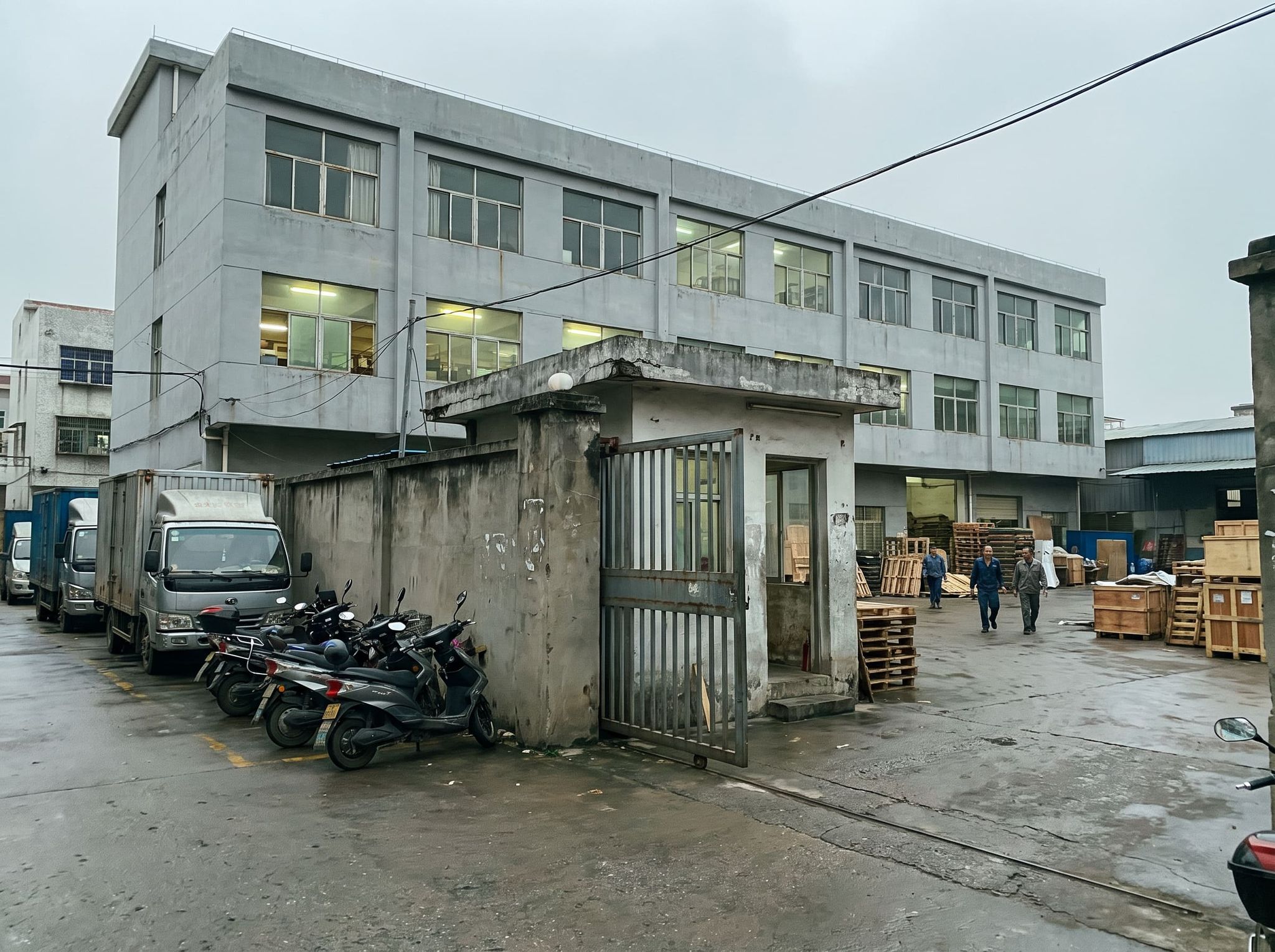
How can I tell if my agent is taking kickbacks from the factory?
Ask in writing, insist on the factory's invoices, occasionally benchmark against a quote you obtain directly, and have at least one inspection carried out by a third party. An exclusive-compensation clause with a right to audit makes the practice risky for the agent.