
- Home
- Guides & resources
- 3PL & e-commerce
- 3PL: the guide to outsourced logistics, from factory to end customer
3PL: the guide to outsourced logistics, from factory to end customer
Storage, fulfillment, returns, pricing, KPIs: how to entrust your logistics to a 3PL, in Asia or in your market, when you import into Europe, the UK or North America.
Contents9 items
What is a 3PL?
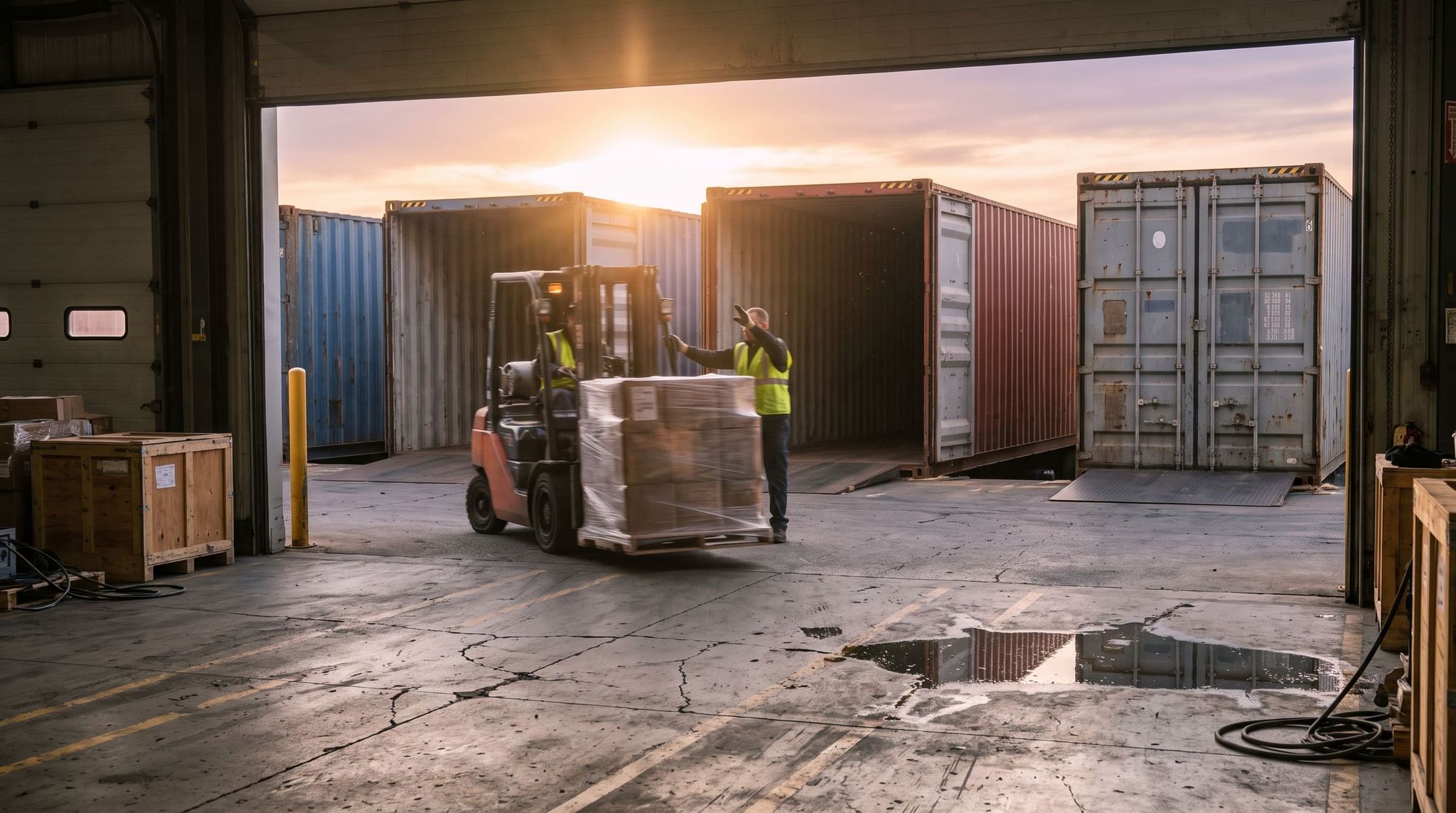
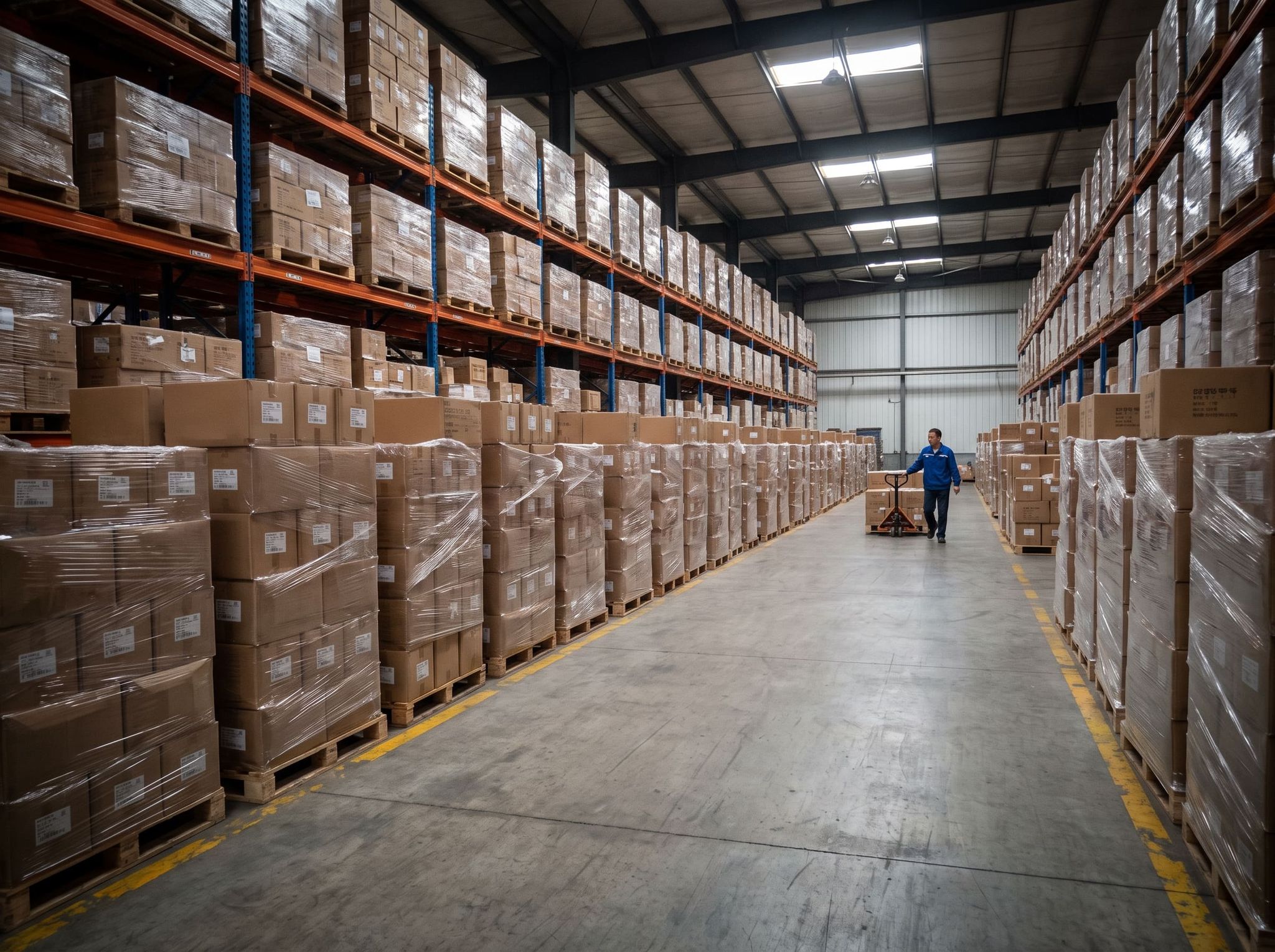
A 3PL (third-party logistics provider) handles all or part of your physical logistics with its own warehouses, teams and tools: it receives your goods, stores them, picks orders and hands them over to carriers. The products remain your property.
Some 3PLs own their warehouses and vehicles (asset-based), others rely on partners (non-asset-based): the former generally offer more control, the latter more geographic flexibility. In e-commerce, the term fulfillment provider is also used, meaning order execution.
European law has its own definition. Regulation (EU) 2019/1020 calls a "fulfillment service provider" any natural or legal person that offers, as part of a commercial activity, at least two of the following services: warehousing, packaging, labeling and shipping, without owning the products. Postal services, parcel delivery and freight transport are excluded. This status has regulatory consequences, detailed below.
1PL, 2PL, 3PL, 4PL, 5PL: a scale, not a standard
| Level | Who does what | Example |
|---|---|---|
| 1PL | The company manages its own logistics | A brand that packs in its own premises |
| 2PL | A carrier performs transport with its own resources | Shipping line, road carrier |
| 3PL | A provider performs several integrated services | A warehouse that stores, picks and ships |
| 4PL | An integrator steers the chain and several providers | A "control tower" coordinating carriers and 3PLs |
| 5PL | An orchestrator of entire networks, 3PLs and 4PLs included | Management of a major account's entire supply chain |
A 3PL's services, from the dock to the customer
- Receiving: unloading, counting, checking against the advance shipping notice (ASN), put-away.
- Storage: pallets on racks, shelving or bins for small SKUs, tracking by batch or expiration date if needed.
- Picking (pick & pack): retrieving items, packing, void fill, carrier label.
- Shipping: handover to carriers and sending the tracking number back to your store.
- Returns: inspection, restocking, repackaging or disposal according to your rules.
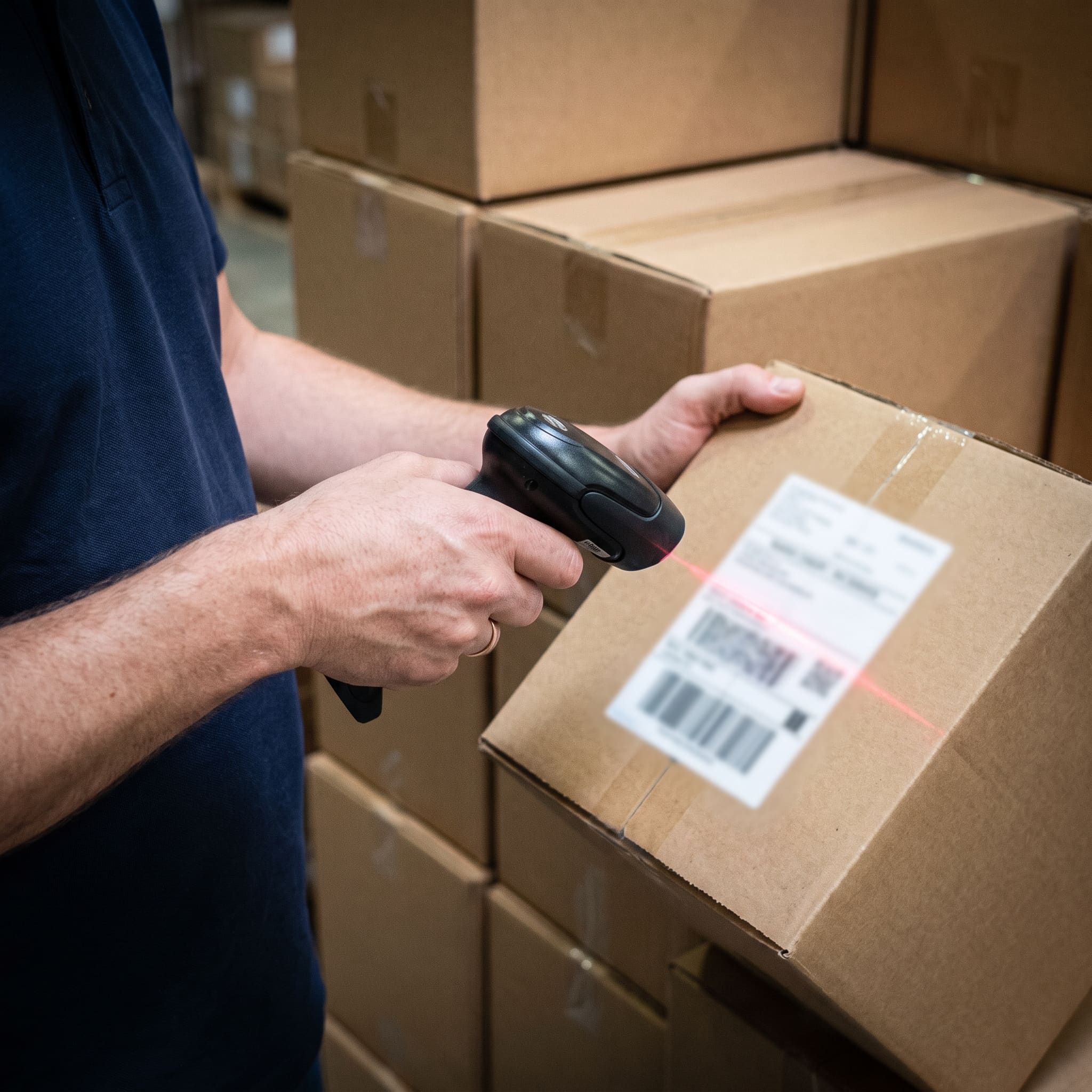
All of it is managed by a WMS (Warehouse Management System) that tracks every SKU (Stock Keeping Unit).
Value-added services
- Kitting: assembling several SKUs into one sellable item (gift set, bundle, box).
- Labeling: EAN product barcodes (Europe) or UPC (North America), FNSKU labels (Fulfillment Network Stock Keeping Unit, Amazon's own barcode), compliance labels.
- Personalization: marketing inserts, gift wrapping.
- Marketplace prep: bringing items up to Amazon's or other platforms' standards. In the United States, Amazon stopped offering its own prep and labeling services for FBA (Fulfillment by Amazon) on January 1, 2026: this work must now be done upstream.
- Cross-docking: direct transfer from the receiving dock to the shipping dock, with no storage, for example to split a container across several stores.
B2C, B2B and omnichannel
Selling to consumers (B2C, business-to-consumer) or to businesses (B2B, business-to-business) does not put the same demands on a warehouse.
| Criterion | B2C (e-commerce) | B2B (distributors, retailers) |
|---|---|---|
| Unit shipped | Parcels with a few items | Full cartons or pallets |
| Key requirements | Speed, presentation, tracking | The retailer's specification, appointments, EDI |
EDI (Electronic Data Interchange) is the automated exchange of orders and shipping notices with distributors. An omnichannel 3PL serves your website, your marketplaces and your business customers from a single stock. Amazon also offers a multichannel service (MCF, Multi-Channel Fulfillment) that ships orders from your other channels out of your stock at Amazon, with less control over branded packaging.
What does a 3PL cost? Reading a rate card
There is no standard price: every 3PL charges per transaction, depending on its country, its automation and your profile (product size, items per order, seasonality). The line items, however, are almost always the same.
| Item | Common billing unit | What makes the price vary |
|---|---|---|
| Setup | Flat fee | Number of channels and integrations |
| Receiving | Container, pallet, carton or hour | Loose or palletized, carton labeling |
| Storage | Pallet, m³ or bin location, per month or week | Volume, turnover |
| Pick and pack | Per order + per additional item | Number of lines, fragility |
| Packaging | Per order or per consumable | Standard or branded carton |
| Transport | Rate card by weight and by zone | Volumes, surcharges, oversized formats |
| Ancillary services | Per unit or per hour | Kitting, labeling, returns |
| Account | Flat fee or monthly minimum | Client size, reporting |
Also check the pallet format the price is based on. In Europe, the benchmark is the EUR/EPAL pallet of 800 × 1,200 mm, but the 1,000 × 1,200 mm format, also standardized, remains widespread. In North America, the standard pallet measures 48 × 40 inches (about 1,219 × 1,016 mm), and storage is often billed per pallet or per cubic foot (about 0.028 m³). Ask for the full rate card, minimums included: a good per-order rate can be offset by high receiving fees or a high monthly minimum.
When should you move to a 3PL?
There is no universal threshold in number of orders. The signals are operational:
- You spend more time packing parcels than selling.
- Errors and shipping delays are increasing.
- Your premises no longer suffice when a container arrives.
- Peaks (sales, year-end, launches) force you to hire in a hurry.
- You open a channel (marketplace, retail) or a country.
To decide, calculate your full in-house cost per order (floor space, fully loaded salaries, consumables, software, errors, management time) and compare it with two or three 3PL quotes, transport included. Staying in-house is justified if your packaging is part of the brand experience, or if your volumes are too low to interest a provider.
How to choose your 3PL
Location and integrations
A warehouse close to your customers reduces lead times and last-mile cost; close to your port of arrival, it reduces inbound cost. Selling in the EU, the UK, the US and Canada means just as many customs territories: often one stock per zone, or a deliberate trade-off on lead times.
The 3PL must receive your orders and automatically send back stock levels and tracking numbers. On Shopify, WooCommerce or Amazon, many 3PLs offer an app or an API connection (Application Programming Interface, a data exchange interface between software programs) for this. For your ERP (Enterprise Resource Planning, integrated management software) or your distributors, ask for a documented API or EDI, and test the flows before signing.
The KPIs to write into the contract
KPIs (Key Performance Indicators) turn service quality into numbers. The WERC (Warehousing Education and Research Council), the US association of warehousing professionals, publishes an annual report on these indicators. In the 2025 edition, the most closely tracked include on-time shipments, order picking accuracy and dock-to-stock time, measured in hours.
| KPI | What it measures | What to ask for |
|---|---|---|
| Picking accuracy | Share of orders shipped without error | A quantified commitment and penalties |
| Dock-to-stock | Time between arrival at the dock and availability for sale | Maximum lead time |
| On-time shipment | Share of orders shipped within the promised lead time | Same-day cut-off time |
| Inventory accuracy | Gap between system stock and physical stock | Cycle counts, monthly report |
| Returns processing | Time to inspect and put back into stock | Maximum lead time and sorting rules |
These commitments form the SLA (Service Level Agreement). Also read the clauses on monthly minimums, reserved capacity for peaks, the cap on compensation for loss or damage, exit (notice period, destocking fees, return of data) and warehouse audit.
3PL in Asia or in your destination market?
The two warehouses do not play the same role and can be combined.
| Criterion | Origin warehouse in Asia | 3PL in the market (EU, UK, North America) |
|---|---|---|
| Main role | Control, consolidate, prepare | Store close to the customer, deliver |
| Customer delivery lead time | Long, on international shipments | Short, on domestic delivery |
| Customs, duties and taxes | On every parcel on direct shipments | Once, on the imported batch |
| Returns | Hard to bring back | Handled locally |
| Ideal for | Consolidation, kitting, FBA prep, market testing | Ongoing multichannel and B2B sales |
What has changed for direct shipments of small parcels
Duty exemptions on low values, which favored shipping individual parcels from Asia, are disappearing or remain very low:
- European Union: since July 1, 2026, a temporary flat duty of €3 (≈ $3.30) per item applies to distance sales shipments of up to €150 (≈ $165). It is counted per tariff heading, meaning per category of the customs nomenclature: five t-shirts = €3 (≈ $3.30), three t-shirts and a watch = €6 (≈ $6.70). Standard duties will take over on July 1, 2028.
- United States: the de minimis exemption (shipments up to $800) has been suspended for all countries since August 29, 2025. In June 2026, US Customs (CBP, Customs and Border Protection) made this suspension indefinite, and the law removes the exemption on July 1, 2027. Every shipment must be declared and pay the duties owed.
- United Kingdom: the removal of the duty exemption on shipments of £135 or less, announced in the 2025 Budget, was brought forward on June 23, 2026: it will apply from October 2028.
- Canada: according to the Canada Border Services Agency (CBSA), a shipment from Asia, by post or courier, is exempt from duties and taxes only up to 20 Canadian dollars.
Importing by container to a local 3PL, clearing customs once, therefore becomes more often competitive: run the numbers product by product. The formalities for each region are detailed in our guide to customs clearance in the EU, UK and USA.
Storing locally: three points to plan for
Taxation of stock. Stock held in a country often creates tax obligations in that country, and they differ from one region to another.
| Region | What local stock involves |
|---|---|
| EU | The OSS (One-Stop Shop) simplifies VAT on sales between member states, without covering every case |
| United Kingdom | Mandatory UK VAT registration for a foreign seller selling from that stock |
| United States | Possible obligation to collect the sales tax of the state where the stock is held |
| Canada | Specific rules for GST/HST registration (goods and services tax, harmonized sales tax) |
Have your setup reviewed by a tax advisor before opening a warehouse in a new country.
The European responsible person. Since December 13, 2024, the GPSR (General Product Safety Regulation, Regulation (EU) 2023/988 on general product safety) requires an economic operator established in the EU to be accountable for every consumer product placed on the market. This is the manufacturer if established in the EU, otherwise the importer or an authorized representative (a person established in the EU, appointed in writing to act on behalf of the manufacturer). Failing that, this role falls to the 3PL, if established in the EU, for the products it handles: some 3PLs therefore refuse products without a designated European responsible person. Better to organize it yourself, see our guide to CE, UKCA and GPSR.
The customs warehouse. A customs-licensed 3PL can store uncleared goods. Duties and taxes are suspended until they are released for free circulation, meaning the customs clearance that allows them to be sold on the market, and are not owed if they are re-exported.
In the EU, storage duration is in principle unlimited. In the UK, the warehouse operator must be licensed by HMRC (HM Revenue & Customs, the UK tax and customs authority). In the US, a bonded warehouse can hold goods for up to five years after their importation, extendable on a justified request.
From the factory to the 3PL: how NOVASEA connects the chain
A 3PL's success is often decided before the container arrives. At NOVASEA, the chain follows six steps:
- Logistics specification: packaging, carton marking, barcodes and marketplace labels are defined with you and sent to the factory.
- Inspection before balance payment: quantities, markings and packaging are checked at the factory along with quality.
- Consolidation in China: your suppliers' orders arrive at the consolidation warehouse best suited to their factories, where we check quantities, cartons and labeling, and carry out kitting and FBA prep if needed.
- A single container: optimized and documented loading. Costs and risks with each factory follow the Incoterms® rule chosen at order (Incoterms® is a registered trademark of the International Chamber of Commerce, ICC).
- Customs clearance and delivery to the 3PL of your choice or to one of our partner warehouses in Europe, the UK or the US, with an ASN sent in advance.
- Monitoring: inspections, documents and shipment status are shared in NOVASEA Bridge.
Multi-supplier consolidation is detailed in our guide to consolidation in China; freight, customs and storage on the Logistics & 3PL page, marketplace prep on the Brand & e-commerce page.
Frequently asked questions
What is the difference between a 3PL and a freight forwarder?
A freight forwarder organizes international transport and its formalities, often through to customs clearance. A 3PL manages stock and orders once the goods have arrived. Some groups do both, but they are two different businesses and often two different contracts.
Can a 3PL clear my goods through customs?
Some offer it, alone or with a partner customs broker. Specify in writing who declares, on whose behalf, and who pays duties and taxes: the importer of record remains in principle responsible for what is declared in their name, even when they delegate the declaration.
Do I need a 3PL if I sell on Amazon with FBA?
FBA is already a fulfillment service, but it only accepts products prepared according to its rules. A common setup is to keep buffer stock at a 3PL or in Asia, which replenishes FBA through successive shipments and serves your other channels.
Can my 3PL be the responsible economic operator for my products in the EU?
Only as a last resort: Regulation (EU) 2019/1020 provides for this for the products it handles, when no manufacturer, importer or authorized representative is established in the Union, and provided the 3PL itself is established there. Don't count on it: explicitly designate an importer or authorized representative, and check that their contact details accompany the product.
Sources
- Regulation (EU) 2019/1020, Articles 3 and 4 — EUR-Lex (new tab)
- Regulation (EU) 2023/988 (GPSR), Article 16 — EUR-Lex (new tab)
- Temporary flat fee on low-value imports (June 8, 2026) — European Commission (new tab)
- €3 customs duty for low-value parcels (June 29, 2026) — European Commission (new tab)
- Customs warehousing (storage) — European Commission (new tab)
- VAT One Stop Shop (OSS and IOSS) — European Commission (new tab)
- EU VAT One Stop Shop (OSS) — Your Europe (new tab)
- Suspension of Duty-Free De Minimis Treatment for All Countries — U.S. CBP (new tab)
- Indefinite Suspension of the De Minimis Exemption (June 24, 2026) — Federal Register (new tab)
- 19 CFR 144.5, Period of warehousing — eCFR (new tab)
- Acceleration of cheap import reforms (June 23, 2026) — GOV.UK (new tab)
- VAT and overseas goods sold directly to customers in the UK — HMRC (new tab)
- How to use a customs warehouse — HMRC (new tab)
- Low-value shipments — Canada Border Services Agency (new tab)
- US FBA prep and labeling services to end January 1, 2026 — Amazon (new tab)
- Multichannel Fulfillment (MCF) — Amazon Supply Chain Services (new tab)
- Third-Party Logistics (3PL): How It Works — Shopify (new tab)
- 3PL vs 4PL — Maersk (new tab)
- Fifth-Party Logistics (5PL) — DHL Freight Connections (new tab)
- WERC 2025 DC Measures Report — MHI Solutions (new tab)
- EPAL Euro pallet — European Pallet Association (new tab)
- Pallet (ISO 6780 standard dimensions) — Wikipedia (new tab)
- Incoterms® rules — ICC (new tab)